The Circular Economy of Renewable Energy
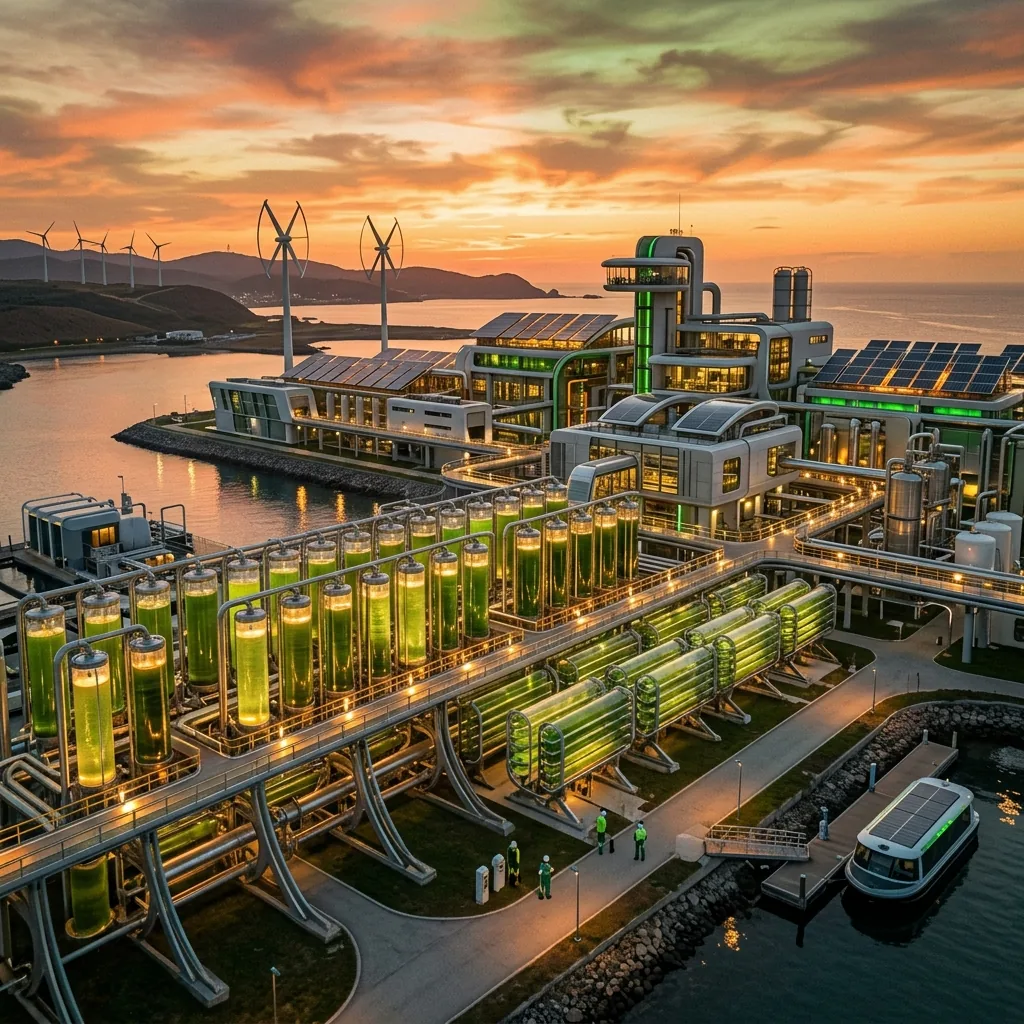
True sustainability is not only about using a cleaner input. It requires understanding what happens to energy, water, nutrients, products, and waste across a complete system.
At PT Gapah Lantas Baharu (LANTAS), circularity is a design question for our research—not yet a commercial result.
What Is a Circular Economy?
A circular system aims to reduce waste, keep materials in useful circulation, and avoid shifting environmental cost from one stage to another. For bioenergy, that means testing whether each byproduct can safely and economically become an input elsewhere.
A Research Hypothesis
The diagram below is a hypothesis. Each connection must be validated for safety, energy use, product quality, regulation, and local economics before it can be described as a functioning loop.
       [ CO2 + Sunlight ]
                │
                ▼
      [ Algae Cultivation ] ◄── [ Nutrient Recovery? ]
                │
                ▼
          [ Harvesting ]
                │
                ▼
       [ Lipid Separation ]
         /             \
        ▼               ▼
 [ Lipid Fraction ]  [ Residual Biomass ]
        │               │
        ▼               ▼
 [ Product Route? ]  [ Safe Use? ]
1. Carbon dioxide
Microalgae use carbon dioxide during photosynthesis. Any future carbon benefit must be assessed across the complete lifecycle rather than inferred from biology alone.
2. Water and nutrients
Underused or non-arable environments may offer cultivation opportunities. Water remediation is a separate technical and regulatory claim that requires site-specific evidence, so it is not part of our current public promise.
3. Residual biomass
Separating lipids may leave a residual fraction. That material could have value, but its composition and safe use must be tested before considering routes such as:
-
Soil inputs: subject to contaminant, agronomic, and regulatory testing.
-
Feed ingredients: subject to nutrition and feed-safety approval.
-
Biomaterials: subject to performance and processing validation.
Designing with Local Participants
A circular economy is not only biological; it is social. Future field models should be designed with local participants, clear ownership, fair economics, and realistic operating responsibilities. We are exploring those models and welcome conversations with potential field and research partners.
Measure the Loop
To make any circular loop credible, material and energy flows must be measured. Digital tracking may support that work, but instrumentation cannot substitute for reliable field data.
Conclusion
The future of energy should be more circular. Microalgae may contribute, but every attractive output in the diagram above is a question to validate. LANTAS is building the evidence one stage at a time.